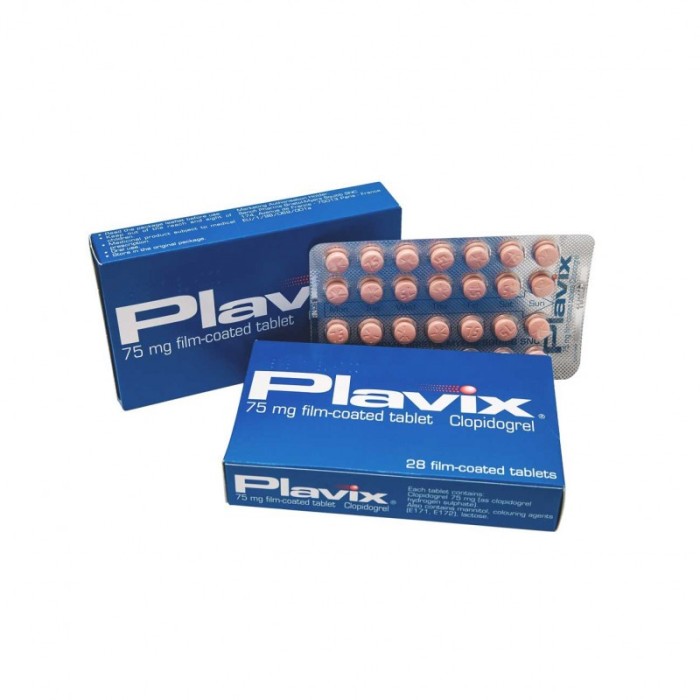
Reduces the risk of stroke, myocardial infarction, and vascular death in patients with atherosclerosis
Formula
C16H16ClNO2SВ·H2SO4
International shippingWe ship your orders within 2 to 7 days after receiving payment. The approximate delivery time for your order is 7 to 21 days.Payment for goodsThe site accepts cash payments or full prepayment to our European bank account.Return policyIn accordance with current legislation, goods that meet quality requirements cannot be exchanged or returned.Protection against counterfeitingEvery product on our website is original and has a code that allows you to verify its authenticity on the manufacturer's website.
Plavix Sanofi is a widely recognized medication primarily utilized for its antiplatelet properties. The active ingredient, clopidogrel, belongs to a class of drugs known as thienopyridines. It plays a crucial role in inhibiting platelet aggregation by selectively blocking the P2Y12 ADP receptors on the platelet surface. This action is fundamental in preventing cardiovascular events such as myocardial infarction and stroke, especially in patients with a history of vascular disease. The pharmacodynamics of clopidogrel involves the irreversible binding to the receptor, translating to prolonged antiplatelet effects. In essence, Plavix acts as a preventive measure in reducing the risks associated with arterial clots, which can lead to severe health complications.
The drug's pharmacokinetics is notable; it is rapidly absorbed after oral administration, with peak plasma concentrations occurring approximately 1 hour post-ingestion. Clopidogrel itself is a prodrug and requires biotransformation in the liver to become active, predominantly through the CYP2C19 enzyme pathway. This metabolic activation is vital for its therapeutic efficacy. The elimination half-life of clopidogrel is about 6 hours, but the antiplatelet effect can last for several days due to the irreversible nature of its binding to platelets. Therefore, the drug is usually taken as a once-daily dosage, which contributes to its patient compliance. Users of Plavix have noted its effectiveness, and reviews often highlight the improvement in their health when used as prescribed.
Effect of the product on metabolism and athletic performance
While Plavix is primarily indicated for cardiovascular event prevention, its effects on metabolism and athletic performance are worthy of discussion. Athletes often require optimal blood flow and enhanced oxygen delivery during physical exertion. The antiplatelet effects of clopidogrel may facilitate better perfusion to the muscles, theoretically enhancing performance in endurance sports. However, it is essential to recognize that while some individuals may experience marginal benefits, the use of Plavix should be approached with caution in this context. The side effects may include fatigue, which can hinder athletic performance rather than enhance it.
The decision to integrate Plavix into an athlete's regimen must be made individually and under the supervision of a healthcare professional. In sports medicine, the focus is typically on maintaining peak performance while minimizing injury and recovery times. Therefore, while Plavix's capability to improve blood flow could ostensibly benefit endurance athletes, there is insufficient evidence supporting its use as a performance-enhancing drug. Moreover, the resultant side effects, such as increased risk of bleeding, can significantly outweigh potential advantages, and comprehensive assessments are required to ascertain its place in sports medicine applications.
Application in sports medicine
In sports medicine, the application of medications like Plavix is generally reserved for individuals at an elevated risk of thromboembolic events. This cohort includes athletes with a history of cardiovascular disease or those recovering from surgical procedures affecting vascular integrity. The use of antiplatelet therapy aims to prevent complications that could arise from strenuous physical activity. As athletes push their limits, the risk of clot formation may increase, and Plavix can serve as an essential tool in mitigating these risks.
However, prescribing Plavix to athletes who do not have pre-existing conditions requires careful consideration. While the potential benefits in terms of enhanced blood flow are intriguing, the ramifications of side effects cannot be overlooked. Instances of easy bruising, gastrointestinal bleeding, and prolonged bleeding times can significantly impact an athlete’s ability to train and compete. Health professionals in sports medicine must weigh the extensive benefits of Plavix against the potential adverse effects that could compromise an athlete's performance or health.
Side effects, contraindications, and body reactions
While Plavix Sanofi offers substantial benefits in managing cardiovascular risks, it is essential to be aware of potential side effects and contraindications. The most common adverse reactions include bleeding complications, such as nosebleeds, gastrointestinal bleeding, and major bleeding episodes, primarily due to the drug's effect on platelet function. Other side effects reported by users may include headache, dizziness, and potential allergic reactions. These various responses underscore the importance of monitoring during treatment, especially for patients predisposed to bleeding disorders.
Contraindications for Plavix include hypersensitivity to clopidogrel or any of its components, active bleeding conditions, and those with severe liver dysfunction. It is also advised to use caution in individuals taking concomitant medications that may increase bleeding risks, such as non-steroidal anti-inflammatory drugs (NSAIDs) or anticoagulants. Given the interactions and potential side effects, consulting a healthcare provider before initiating therapy is recommended to ensure a safe and effective treatment plan tailored to the individual's health status.
Chemical composition, form of release, and manufacturer’s recommendations
Plavix Sanofi is formulated with the active ingredient clopidogrel bisulfate, a thienopyridine derivative designed for oral administration. The standard dosage form available is a coated tablet, facilitating ease of use for patients. This formulation is visually identifiable by its oval shape, pink color, and embossed logo, which ensures that patients can easily identify their medication. The need for patient adherence is paramount, and the once-daily administration aligns with the lifestyle of most consumers, making it a convenient choice for ongoing treatment.
The manufacturer’s recommendations highlight the importance of taking Plavix as directed, with or without food. Consistency in administration helps maintain stable therapeutic levels in the bloodstream. Patients should also be informed of the importance of completing the full prescribed course, as discontinuation can increase the risk of serious cardiovascular events. Users often express appreciation for the simplicity in taking the medication, contributing to positive reviews regarding its usability and effectiveness.
Where and why it’s worth buying Plavix Sanofi online in our store in Ireland
Purchasing Plavix Sanofi online can provide several benefits for consumers in Ireland. Our store guarantees authentic products sourced directly from manufacturers, ensuring that you receive medication that meets the necessary quality standards. The competitive pricing options we offer make it easier for you to manage healthcare costs. By opting to buy online, you can conveniently place orders from the comfort of your home, sidestepping the need for in-person pharmacy visits, which can be particularly useful during busy schedules or health-conscious times.
Furthermore, buying Plavix online allows for easy access to customer reviews, empowering you with the knowledge from others who have previously used the drug. This feedback can aid in making informed decisions about treatment. Our online platform also frequently updates its pricing, promotions, and stock availability, allowing you to benefit from the best possible deals. With a focus on customer satisfaction and discretion, purchasing Plavix Sanofi online can simplify the experience while ensuring access to essential healthcare needs.